
Connected Capabilities with Clear Control Boundaries
Batoi Intelligence, Platform Workspace context, Identity, Integrations, authenticated external access, policy enforcement, security gates, evidence, and deployment boundaries work together without becoming one undifferentiated control layer.
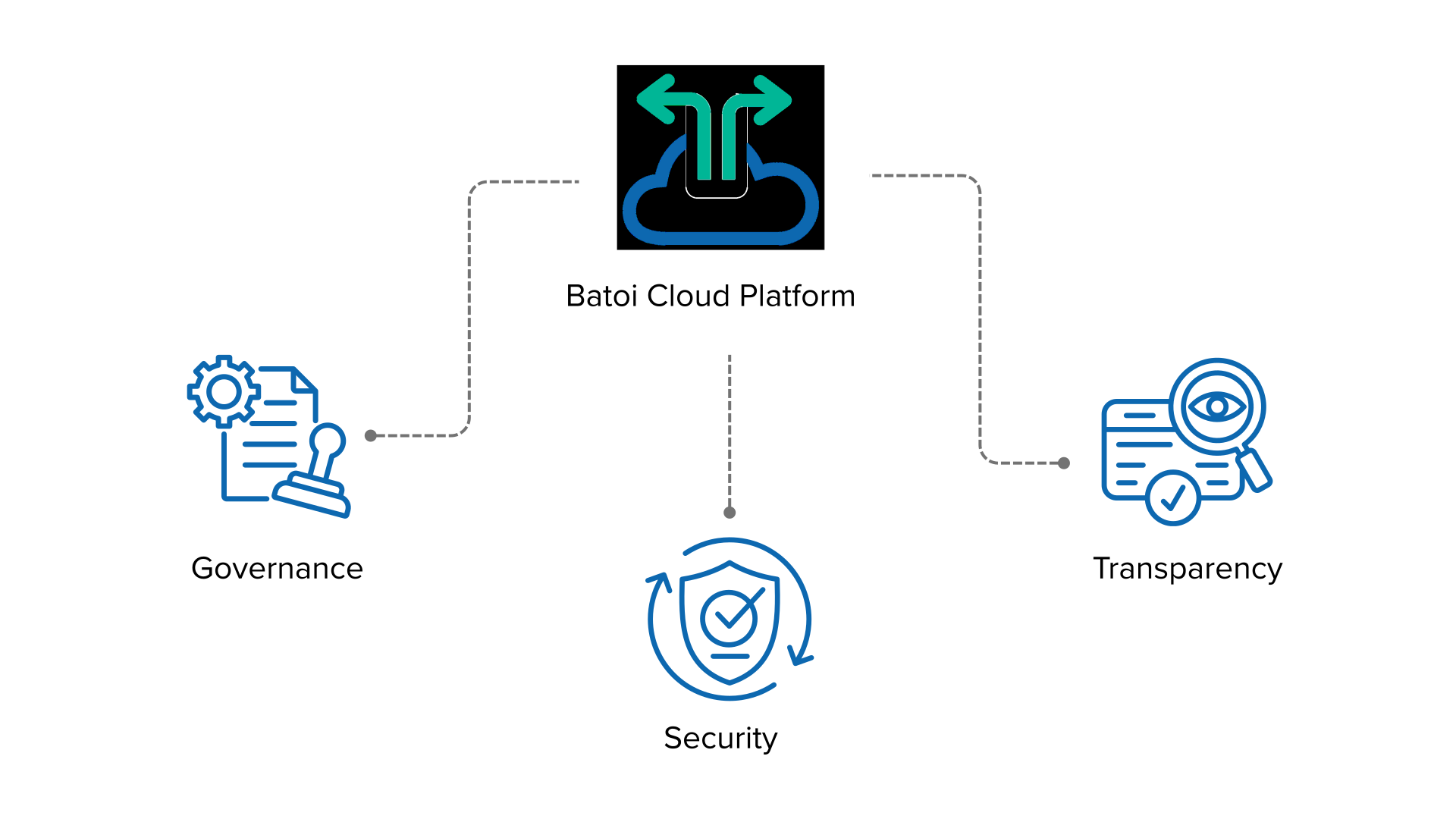
What the Platform Provides
These features sit beneath products and deployments so governance, identity, and operational evidence do not fragment across tools.
Batoi Intelligence
Governed assistance and orchestration use approved product context to help people understand, draft, analyze, recommend, and coordinate supported work. People and authoritative workflows retain decisions, approvals, and release authority.
Identity and Access
Identity binds human, service, workload, and agent actions to a scoped principal, credential, delegation, purpose, expiry, and accountable owner.
Platform Workspaces
Platform Workspaces provide organization and environment context; they do not grant implicit access to every product, integration, asset, or runtime.
Projects and Operations
Project-level context connects delivery work, operational activity, assets, and accountability within a governed execution model.
Policy Decisions and Enforcement
Govern returns versioned decisions, reasons, obligations, and approval requirements; each enforcement point must apply that response to the exact scoped action.
Auditability
Decision, approval, enforcement, security, and outcome references form reviewable evidence for supported actions without exposing private payloads publicly.
Integrations and Public Ingress
Integrations manages provider connections and capability bindings. Authenticated public /go ingress validates approved callbacks, webhooks, federation, and provisioning requests before routing them to the appropriate application or workflow.
Not sure which capability fits your goal? Start with the outcomes you want to achieve
A Capability-Led View of the Platform
The platform feature set is designed to support both product-led use cases and broader digital operations.
- Platform Workspace dashboards and operational context
- Users, roles, access, and identity controls
- Projects, files, Playbook, messages, and collaboration
- Forms, Report Center, compliance packs, and evidence
- Notifications, activity logs, AI logs, and observability
- Exchange assets, extensions, connectors, and UI packs
- Governed integration fabric across systems
- Deployment flexibility across managed environments
How Platform Capabilities Work Together
Build, Govern, and Guard have distinct responsibilities on one shared Platform foundation.
Govern
Owns policy and risk decisions, approval requirements, obligations, assessments, and governance evidence used by delivery enforcement points.
Explore GovernBuild
Orchestrates application and API implementation, review, release, deployment, and verification using shared control-plane decisions.
Explore BuildGuard
Owns security findings, supply-chain checks, release blockers, exceptions, attestations, and security evidence.
Explore GuardBuilt for Extension and Deployment Choice
Platform contracts give extensions and deployment targets a common integration model; compatibility and enforcement still require verification.
- Exchange extensibility supports reviewed assets, explicit installation and binding, contextual execution, controlled updates, advisories, rollback, and revocation.
- Deployment flexibility supports verified Batoi-managed, partner-managed, and customer-managed environment patterns with explicit ownership boundaries.
- Shared auditability keeps operational records tied to identity, policy, and product activity.
Exchange
Controlled discovery, publication, installation, binding, update, advisory, and revocation lifecycle.
View ExchangeDeployment Model
Deployment choice with verified runtime, data, credential, ingress, evidence, update, and support boundaries.
View DeploymentExplore the Platform in Context
Start with the feature catalog, then go deeper into architecture, governance, deployment, and product capabilities.