
Security Practices from Development to Operation
Batoi applies security practices across design, development, deployment, monitoring, and service management. Applicable controls and responsibilities depend on the product, deployment model, service arrangement, and documented assurance scope.
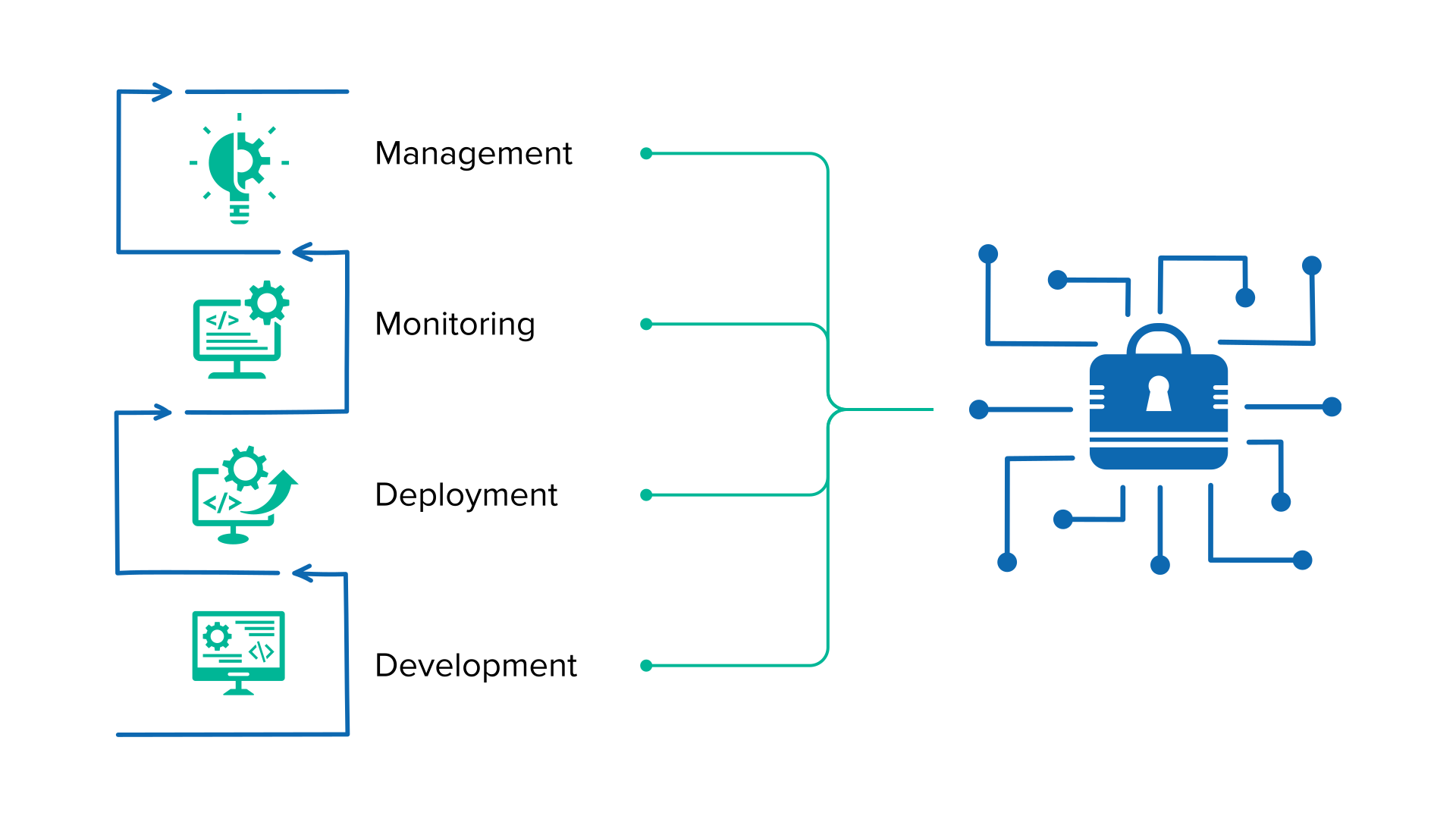
DevSecOps Integration
Security checks integrated into supported delivery workflows
DevSecOps Approach
Automated Security Checks
Continuous Improvement
Authentication & Access Control
Layered identity and access controls
Multi-Factor Authentication (MFA)
Multi-Factor Authentication (MFA) can provide an additional verification layer for supported accounts and deployment arrangements.
Role-Based Access Control (RBAC)
Role-Based Access Control (RBAC) helps scope access to system functions and data according to assigned responsibilities.
Single Sign-On (SSO)
Supported deployment arrangements can use Single Sign-On (SSO) integration to connect access with an approved identity provider.
Security Monitoring and Response
Monitoring, Alerts, and Threat Response
Monitoring Controls
Automated Alerts and Incident Response
Integrated Telemetry Tools
Regular Penetration Testing
Encryption Standards
Industry-Standard Encryption for Data Protection
Data Encryption at Rest and Transit
Supported services use encryption in transit and at rest according to the applicable architecture, provider configuration, and documented assurance scope.
Secure Data Storage
Approved storage services are selected and configured according to data classification, residency, access-control, encryption, retention, and contractual requirements.
Key Management
Key-management policies define applicable requirements for generation, storage, access, rotation, and revocation.
Threat Intelligence and Incident Response
Staying Ahead of Threats with Proactive Measures
Threat Intelligence Systems
Approved threat-intelligence sources can inform risk review, detection logic, protective controls, and response priorities.
Incident Response Team
Defined incident-response roles coordinate triage, containment, recovery, evidence, and communication according to the applicable service and escalation arrangement.
Security Awareness and Training
Security awareness activities help employees, contractors, and participating partners understand current threats, social-engineering risk, reporting duties, and applicable practices.
Discuss your security and assurance requirements
Review the deployment scope, responsibilities, controls, evidence, and support arrangements relevant to your organization.