
 Batoi Corporate Office
India’s Digital Personal Data Protection (DPDP) Act has shifted how businesses think about data. For large enterprises, compliance is expected to involve multiple systems, consultants, and structured governance layers. For small and growing businesses, the challenge is different.
It is not about awareness. It is about execution.
Customer data is already being collected through inquiries, forms, bookings, invoices, and communication. But the evidence of how that data is handled is often fragmented. Consent may be implied but not recorded. Access and deletion requests are handled manually. Activity logs are scattered across systems. When compliance questions arise, teams struggle to reconstruct what happened. Batoi Flex is designed to address this gap.
From Compliance Awareness to Operational Reality
Most small businesses do not lack intent when it comes to compliance. They lack structure. The expectation under DPDP is not just to follow principles, but to demonstrate them:
- How consent was obtained
- How data is processed
- Who accessed information
- How requests are handled
- How actions can be audited
In many cases, the difficulty lies in the fact that these activities happen across multiple tools.
A customer inquiry might be received through a form. A follow-up happens over email or messaging. Documents are shared separately. Payments are tracked elsewhere. None of these steps is inherently non-compliant, but they are not connected.
Compliance becomes difficult because evidence is not centralized.
Embedding Compliance into Daily Workflows
Batoi Flex approaches compliance differently. Instead of treating compliance as a separate system or periodic exercise, it integrates compliance into the same environment where businesses already operate. It includes:
- Managing customer and contact information
- Handling inquiries and requests
- Tracking projects and interactions
- Generating invoices and payment links
- Publishing services and forms
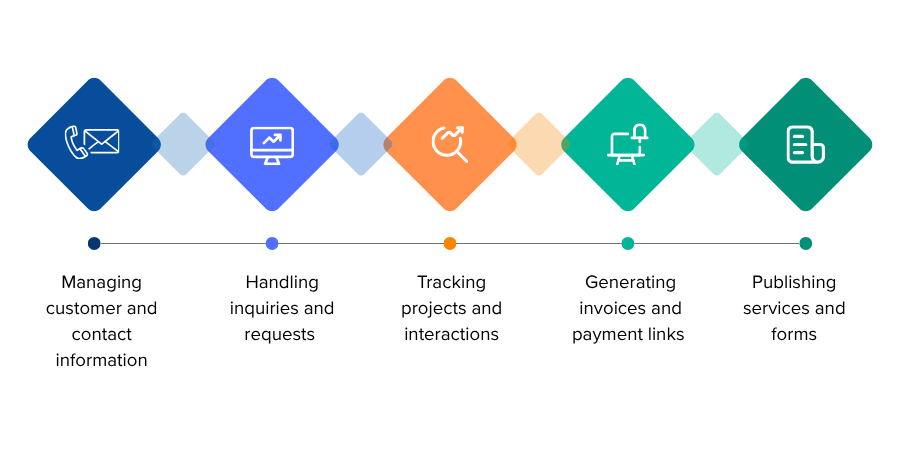
With DPDP support introduced into this structure, these everyday actions become traceable. Consent can be recorded as part of data collection. Requests can be tracked within the system. Activity can be logged consistently. Evidence can be generated from actual operational workflows rather than reconstructed after the fact.
The result is not an additional process. It is better alignment.
What DPDP Support Means in Practice
For a small business, DPDP compliance does not begin with documentation. It begins with clarity.
A structured system should allow teams to answer:
- When was this customer’s data collected?
- What was the stated purpose?
- Who accessed or modified the data?
- How was a request handled?
- Can this activity be demonstrated if required?
Without this clarity, compliance becomes reactive. With it, compliance becomes part of normal operations. Batoi Flex enables this by introducing:
- Consent-aware data handling
- Request workflows for access and deletion
- Traceable activity logs
- Structured export of compliance-related data
- Centralized visibility across workspace activity
These are not separate modules layered on top. They are part of how the system works.
Why This Matters Now
The DPDP Act is not just a regulatory requirement. It is a structural change. For the first time, a large segment of Indian businesses, including small and mid-sized firms, must formally think about data governance.
The challenge is that most SMB software is not designed for this. Traditional tools focus on functionality:
- CRM systems manage leads
- Invoicing tools handle billing
- Website platforms handle publishing
But very few systems integrate governance and auditability into these functions. It creates a gap between operation and compliance.
Batoi Flex is positioned to bridge that gap by making governance a property of the system itself rather than an external layer.
Compliance Without Over-Engineering
It is important to clarify what DPDP support in Flex does not attempt to do. It does not:
- Replace legal advisory
- Automate regulatory filings
- Provide certification
- Eliminate the need for policy definition
Instead, it focuses on something more practical:
- Making data handling visible
- Making actions traceable
- Making evidence reproducible
For small businesses, this is often the missing layer.
Compliance frameworks assume that systems are structured. Many SMB environments are not. The value of Flex lies in introducing that structure without forcing complexity.
A Shift in How SMB Software Is Designed
The introduction of DPDP compliance support reflects a broader shift. Small business software is no longer just about features. It is about responsibility.
As regulations evolve, systems must do more than enable operations. They must also support accountability. It does not require enterprise-level infrastructure. It requires thoughtful design.
When identity, access, activity, and data handling are aligned within one system, governance becomes natural rather than imposed.
The Practical Outcome
For a small or growing business, the benefit is straightforward. Instead of:
- Collecting data in one place
- Managing interactions in another
- Tracking actions elsewhere
- Assembling evidence manually
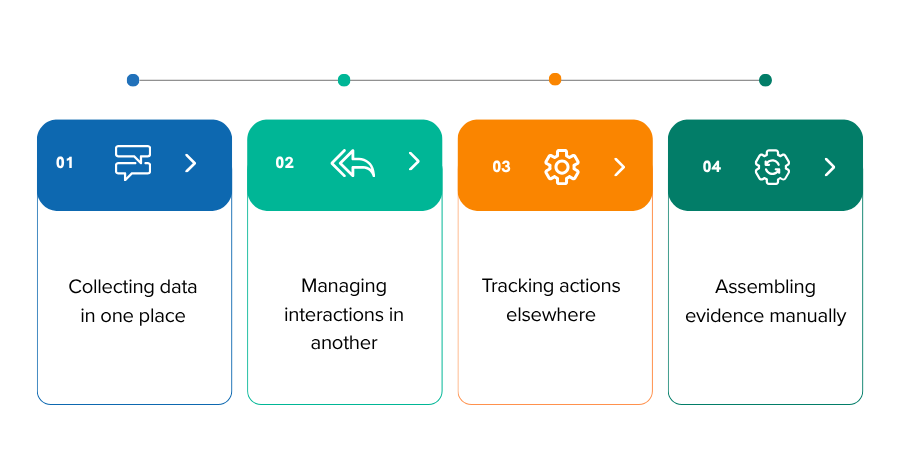
Everything exists within a coherent structure. It reduces effort, improves clarity, and makes compliance easier to manage.
Final Thought
Compliance should not begin when an audit is scheduled. It should already be part of how a business operates. The introduction of DPDP compliance support in Batoi Flex is not about adding a new feature. It is about aligning operations with accountability. For small businesses, that alignment is what turns compliance from a burden into a capability.