
 Batoi Corporate Office
A few years ago, QR codes felt like a trend. Then they became essential. Now, in many places, they are so common that they are almost invisible. Yet for local businesses, QR codes remain one of the most practical and underused operational tools available.
The reason is simple: QR codes reduce friction. At their best, they remove the small barriers that interrupt customer interaction - typing a long URL, searching for a website, asking for payment details, and filling out forms manually. Each of those steps may seem minor, but together they slow down engagement.
For local businesses - restaurants, clinics, advisory firms, agencies, studios - speed and clarity matter more than novelty. QR codes provide both.
The power of QR codes lies in their simplicity. A customer scans. Something useful appears. No searching. No guessing. No friction. When used thoughtfully, QR codes connect a business's physical environment to its digital operations.
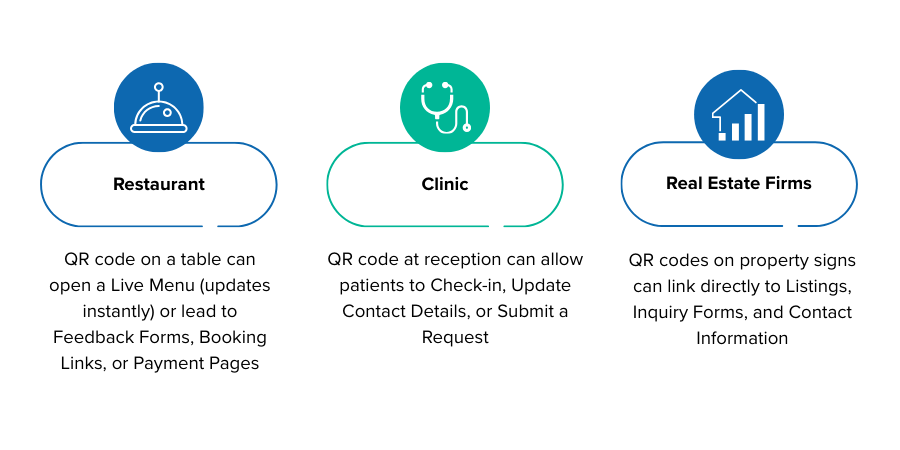
Consider a restaurant. A QR code on a table can open a live menu that updates instantly. No reprinting. No outdated specials. That same QR code can lead to feedback forms, booking links, or payment pages. Instead of multiple printed materials, one simple code becomes the gateway to everything a customer needs.
In a clinic, a QR code at reception can allow patients to check in, update contact details, or submit a request. It reduces paperwork and speeds up front-desk coordination. For real estate firms, QR codes on property signs can link directly to listings, inquiry forms, and contact information. Instead of relying on customers to remember an address or phone number, the information is delivered immediately.
QR codes are not innovative because they are advanced. They are powerful because they are practical. Many local businesses use QR codes in a limited way - often only for payments or menus. But their real value appears when they are integrated into a broader operational system. For example, a QR code can do more than link to a static page. It can connect to booking calendars, service descriptions, inquiry forms, or secure request pages. It can be updated centrally without reprinting materials. It can provide basic visibility into how often customers interact with it.
This last point is often overlooked. When QR codes are connected to a system that tracks activity, they provide operational insight. Which services are being viewed? How often are payment links opened? Are event announcements generating interest? These are small signals, but they help businesses respond intelligently.
The key is not to treat QR codes as isolated marketing artifacts. They should be treated as extensions of the operational structure.
When a business launches a new service, it should include a corresponding link and QR code. When a booking page is created, it should be shareable both online and offline. When a payment request is sent, it should connect back into the same system where customer information and billing are tracked.
This cohesion prevents fragmentation. One quiet risk of QR adoption is creating yet another layer of disconnection. A business might generate QR codes from different tools - one from a payment gateway, another from a website builder, a third from a marketing platform. Over time, these links become scattered and difficult to manage. Updating them requires revisiting multiple systems. Analytics are fragmented. Staff are unsure which link is current.
Used without structure, QR codes can contribute to tool sprawl. Used within a single operational layer, they reduce it.
Local businesses benefit most from QR codes when they follow a few simple principles.
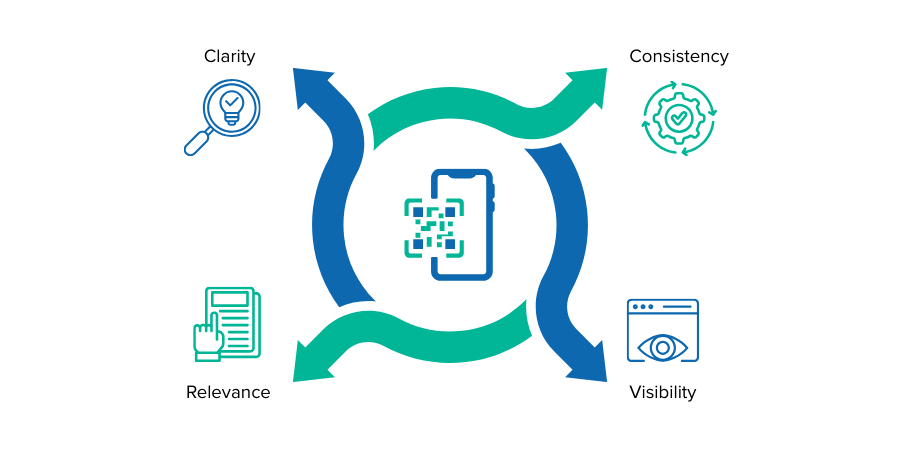
First, clarity. Every QR code should have a clear purpose. Customers should know what to expect when scanning the menu, booking, paying, providing feedback, or contacting the business. Ambiguity reduces usage.
Second, consistency. QR codes should be routed into a central operational system, not into scattered third-party tools, wherever possible. It keeps management simple and makes updates easy.
Third, visibility. Even basic tracking - how many times a link was opened - helps businesses understand engagement patterns without complex analytics.
Fourth, relevance. QR codes should solve a real operational need, not exist for decoration. If scanning does not meaningfully simplify a step, it should not be there.
In today’s environment, customers are comfortable scanning. The hesitation that existed years ago has largely disappeared. What matters now is whether the experience after scanning is clean and useful.
For small and growing businesses, QR codes offer something rare: a low-cost, low-complexity way to tighten the connection between physical presence and digital workflow. They do not require training. They do not demand large investments. They do not disrupt existing systems. They simply create a bridge.
That bridge can support menus, bookings, forms, payments, contact saving, event registrations, service listings, and announcements. It can reduce the need for printed materials. It can simplify staff explanations. It can shorten customer journeys.
In a world full of complex technology conversations, sometimes the most practical tools are the most enduring. For local businesses focused on daily operations, that practicality is exactly what matters.