
 Batoi Corporate Office
Insurance agencies operate in a structured, regulated environment. Policy management systems, claims platforms, and compliance tools are already part of daily operations. These systems are necessary and specialised.
Yet many agencies still experience operational friction - not inside the core insurance platform, but around it. Client inquiries arrive through multiple channels. Renewal follow-ups are tracked in personal reminders. Policy documents are shared through email threads. Billing and communication sit in separate systems. As the book of business grows, coordination becomes harder.
The challenge is not underwriting or compliance. It is operational clarity. Small and mid-sized agencies do not need more complexity. They need structure around the interactions that happen every day.
The Everyday Workflow of an Insurance Agency
An insurance agency’s daily rhythm includes:
- Prospect inquiries
- Quote requests
- Policy issuance
- Renewals
- Endorsements and updates
- Claims-related communication
- Billing and commission tracking
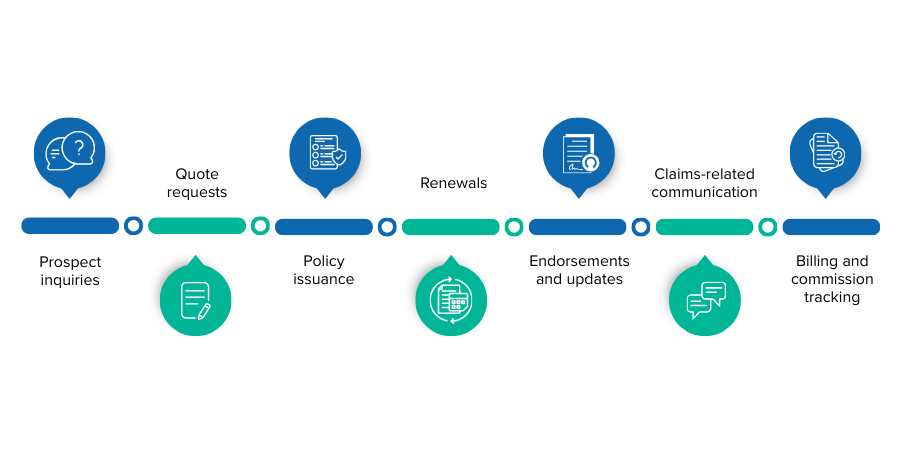
The core policy system handles the formal transaction. But the surrounding communication and coordination often live outside it.
A client calls with a question. An email arrives requesting a quote. A renewal reminder is noted on paper. A document is forwarded and stored somewhere on a shared drive. Each action makes sense individually. Collectively, they become fragmented.
Fragmentation increases risk. A missed renewal can cost a relationship. A delayed response can damage trust.
The Case for Operational Structure
Staying organised does not require replacing core insurance systems. It requires creating a simple operational layer around them.
That layer should make it easy to answer:
- Who is this client?
- What policies do they hold?
- What is currently pending?
- What needs to happen next?
- Has billing been completed?
When these questions require searching across multiple systems, inefficiency follows. The goal is not to replicate policy administration features. It is to centralise visibility around relationships and coordination.
Client and Policy Visibility
Insurance agencies often manage hundreds or thousands of policies. But even in smaller agencies, maintaining clarity across accounts is essential.
A simple, structured view of clients - including contact details, policy types, renewal dates, and notes - reduces reliance on memory.
Even when policy systems contain this information, it is not always visible in a way that supports daily communication. An operational layer should allow staff to see relationship context quickly, without navigating deep system menus.
This improves response time and reduces errors.
Managing Renewals Without Chaos
Renewals are critical in insurance. They are predictable, recurring opportunities that must not be missed. However, renewal tracking often relies on a mix of system alerts, calendar reminders, and personal notes.
A structured approach ensures that:
- Renewal timelines are visible
- Next actions are recorded
- Ownership is clear
- Communication is consistent
The objective is not automation overload. It is a disciplined follow-up. When renewal management is systematic, revenue stability improves.
Handling Inquiries and Quotes
Prospective clients often initiate contact through:
- Website forms
- Phone calls
- Referrals
If inquiries are not captured in a structured way, opportunities can slip away. A simple method to record and track quote requests ensures that:
- No inquiry is forgotten
- Follow-ups are visible
- Staff can see the current pipeline status
This does not require a complex sales CRM. It requires a visible, shared structure.
Document and Communication Coordination
Insurance agencies handle sensitive documentation:
- Policy schedules
- Endorsements
- Claims-related correspondence
- Compliance documents
When document sharing happens exclusively through email, tracking becomes difficult. Staff may search through inboxes to confirm whether something was sent or received.
Associating documents and notes directly with the relevant client or policy improves coordination. It also reduces repeated requests and confusion, and a clear communication history strengthens professionalism.
Billing and Payment Clarity
While commission structures vary, agencies still manage invoices, payments, or fee arrangements in some form.
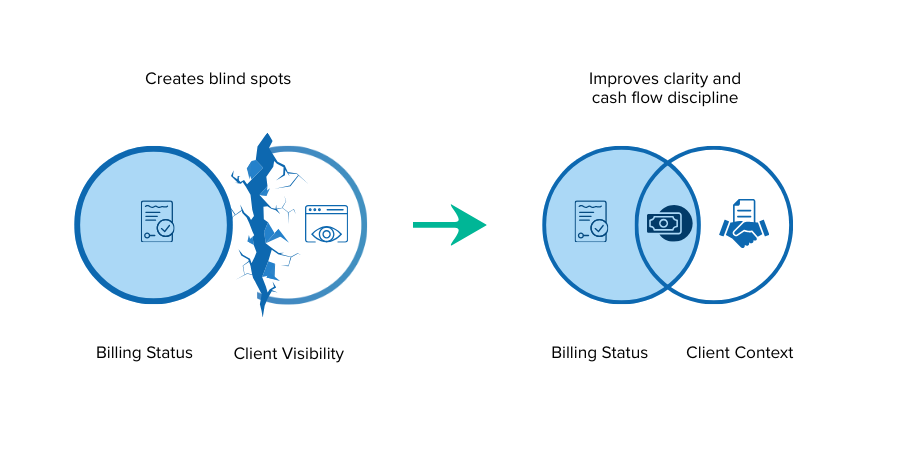
Separating billing from client visibility creates blind spots. Aligning payment status with client context helps staff understand where things stand at a glance.
When billing clarity improves, so does cash flow discipline.
The Risk of Over-Engineering
Insurance is already complex by nature. Adding overly sophisticated operational systems can overwhelm small teams.
A practical structure should:
- Be simple enough for daily use
- Avoid unnecessary configuration
- Support visibility rather than complexity
- Complement, not replace, core insurance systems
Over-engineering reduces adoption. Simplicity supports consistency.
Where QR Codes and Links Fit
For insurance agencies, QR codes may not seem immediately relevant. But they can simplify client interaction in subtle ways.
For example:
- A QR code on business cards linking to service offerings
- A link for requesting policy reviews
- A form for submitting renewal documents
- A simple contact save option for clients
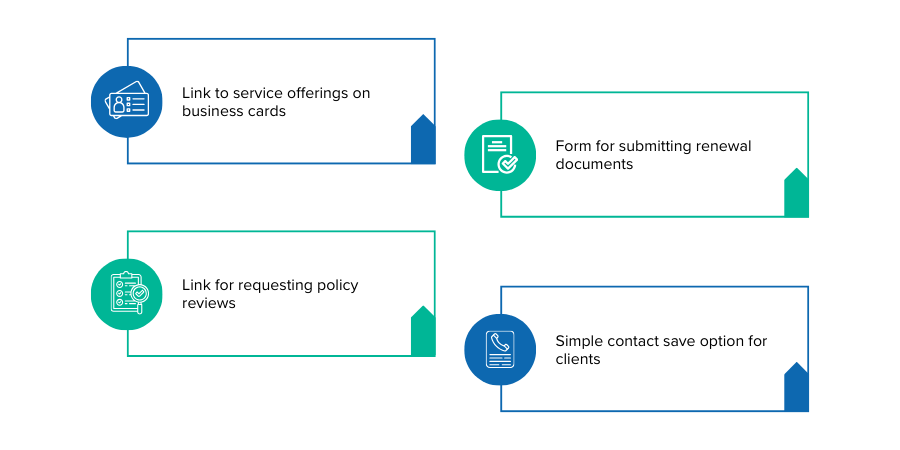
These tools reduce friction in client communication. When linked into a structured system, they enhance coordination.
A Practical Internal Review
An agency can assess its operational clarity with a few questions:
- Can we see all pending renewals clearly?
- Do we have a structured record of quote requests?
- Is client communication visible to more than one staff member?
- Are documents associated directly with the correct account?
- Can new staff quickly understand the workflow?
If answering these requires piecing together information from multiple places, refinement is needed.
Structured Simplicity as an Advantage
In insurance, trust is paramount. Organisation reinforces trust. When clients experience consistent communication, timely renewals, and clear documentation, confidence grows. When staff operate with visibility and shared structure, stress decreases.
Small and mid-sized insurance agencies do not need enterprise-level operational complexity. They need clarity around relationships, renewals, billing, and communication. Structured simplicity reduces risk without adding weight.
The objective is not to replace specialised systems. It is to ensure that daily coordination around those systems remains clear and reliable. When that clarity is present, agencies operate more smoothly, and growth becomes sustainable rather than chaotic.