
 Batoi Corporate Office
Small businesses often reach a moment where someone says, “We need a CRM.” The word itself can feel heavy. It brings to mind dashboards, pipelines, automation rules, lead scoring, and endless configuration screens. For many small teams, implementing a CRM feels like adding complexity to a system that is already crowded.
But here’s the truth: most small businesses do not need a sophisticated CRM. They need clarity around customer relationships.
The goal is not to manage leads like a large enterprise. The goal is to ensure that no customer interaction is forgotten, no follow-up is missed, and no relationship depends solely on memory. That is a very different objective.
Customer management, at its core, revolves around four simple questions:
- Who is this person?
- What have we discussed?
- What needs to happen next?
- What is the current status?
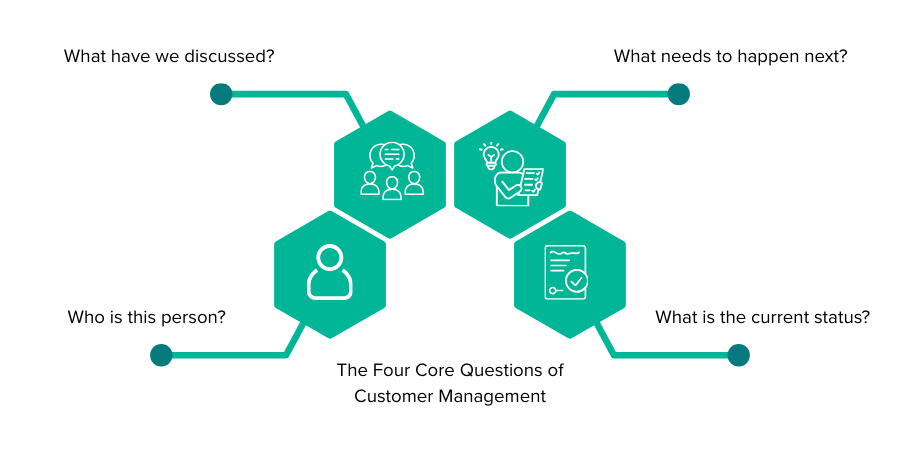
When those four questions can be answered quickly and consistently, the business feels organised. When they cannot, friction appears.
In many small businesses, customer information is scattered. A conversation happens on WhatsApp. Notes are written in a personal notebook. An inquiry arrives by email. A spreadsheet holds partial details. An invoice is sent separately. Each interaction makes sense individually, but collectively they lack structure.
The problem is not the absence of tools. It is the absence of a shared system. A useful way to approach customer management without overload is to think in layers.
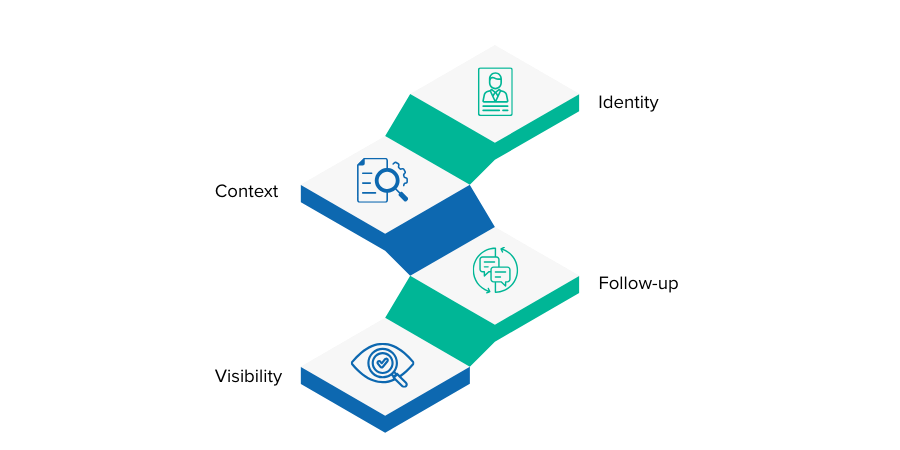
The first layer is identity. Every customer should have a clear record - name, contact details, organisation if applicable. This sounds obvious, but many businesses rely on contact lists buried in messaging apps. Moving customer identity into a central place immediately reduces ambiguity.
The second layer is context. What is this customer interested in? What service are they considering? Have they already purchased something? Context transforms a name into a relationship.
The third layer is follow-up. This is where most small businesses struggle. A conversation ends with “I’ll get back to you,” but nothing tracks that promise. Follow-ups remain in the founder’s mind or in unread message threads. A simple system that allows you to record the next action; even just a note with a reminder prevents quiet losses.
The fourth layer is visibility. Customer management should not be hidden in one person’s inbox. It should be visible enough that another team member can step in when needed. Visibility reduces dependency on individuals and increases reliability.
Notice what is not included here: lead-scoring algorithms, multi-stage enterprise pipelines, and predictive analytics. Those may be useful at scale, but for a small and growing business, they often add noise.
Overloaded CRM systems fail in small teams for a simple reason: they demand discipline that the business has not yet built. When the system feels heavier than the benefit it provides, people stop using it. Data becomes outdated. The CRM becomes a graveyard of incomplete records.
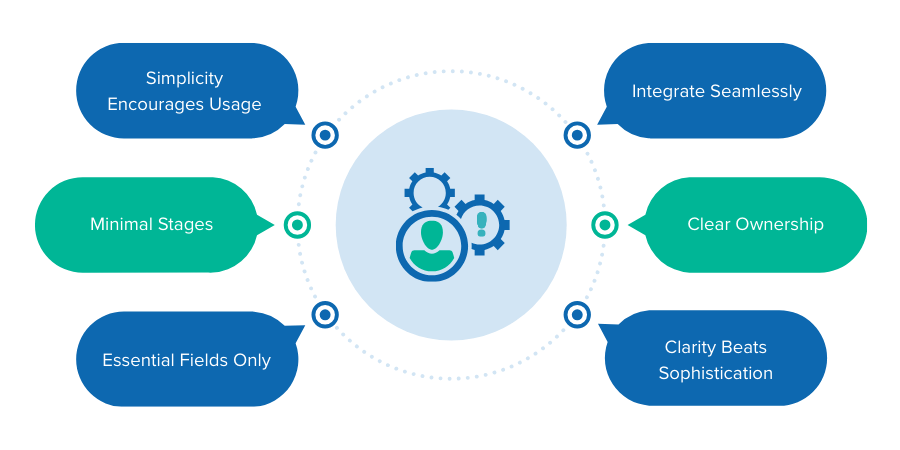
Simplicity encourages usage. A practical framework for small teams is to keep the number of customer stages to a minimum. Instead of eight complex pipeline stages, consider three or four clear statuses: New, In Discussion, Confirmed, Completed. These reflect reality without overengineering it.
Similarly, avoid excessive mandatory fields. If adding a customer requires filling out fifteen fields, it will not happen consistently. Start with essentials. Structure can grow later.
Another common trap is trying to automate too early. Automation is powerful, but premature automation can hide problems. If follow-ups are inconsistent, adding automated emails may mask deeper coordination issues. First, establish a clean, visible process. Then layer automation if truly necessary.
Customer management should also integrate seamlessly with billing and delivery. When a deal is confirmed, invoicing should not require switching into an entirely different mental model. When work is delivered, that context should remain visible in the same flow.
The simpler the transitions between customer conversation, delivery, and billing, the less cognitive strain the team experiences.
One more principle matters: ownership. Every customer interaction should have a clear owner. Not necessarily a permanent one, but someone responsible for the next action. Without ownership, even the best systems fail. With ownership and a simple tracking structure, even basic systems perform well.
Small businesses often underestimate how much mental energy they spend holding customer information in their heads. Reducing that mental load frees capacity for growth.
You do not need an enterprise CRM to achieve this. You need a structure that is easy enough to maintain daily and clear enough to rely on during busy weeks.
If you can quickly answer who your customers are, what they need, what has been promised, and what happens next, you have achieved the real objective of customer management.
Everything else is optional. In the early and growth stages of a business, clarity beats sophistication. The right CRM for a small team is not the one with the most features. It is the one that supports daily discipline without becoming a project in itself.
Customer relationships are too important to live in memory. They should also not live in a system that feels heavier than the business it serves.
The sweet spot lies in simple structure, shared visibility, and consistent follow-up. That is enough.