
 Batoi Corporate Office
Recruitment is one of the most critical activities for any business. When recruitment is managed effectively, you ensure you get the right employees into your business, prevent disruption to business activities, and expand your talent pool. And this is especially important when labor markets are tight. Who you hire will determine the future success of your company. A new recruit can either be an asset or a burden.
In other words, recruitment is critical but also complex. Luckily, various recruitment tools exist today to help you improve the recruitment process. Here we're going to look at some key features of recruitment tools and what benefits they bring to the table.
What is a Recruitment Tool?
Put simply, a recruitment tool is any software that aids your business in making the recruitment process easier. Recruitment management tools have become extremely popular in recent years. For example, a whopping 98% of fortune 500 companies use recruitment tools.
Additionally, recruitment tools have a good reputation for improving the recruitment process. One study found that 68% of recruiting professionals say the best way to improve performance is by investing in the latest recruiting technology.
Types of Recruitment Tools and Some Key Features
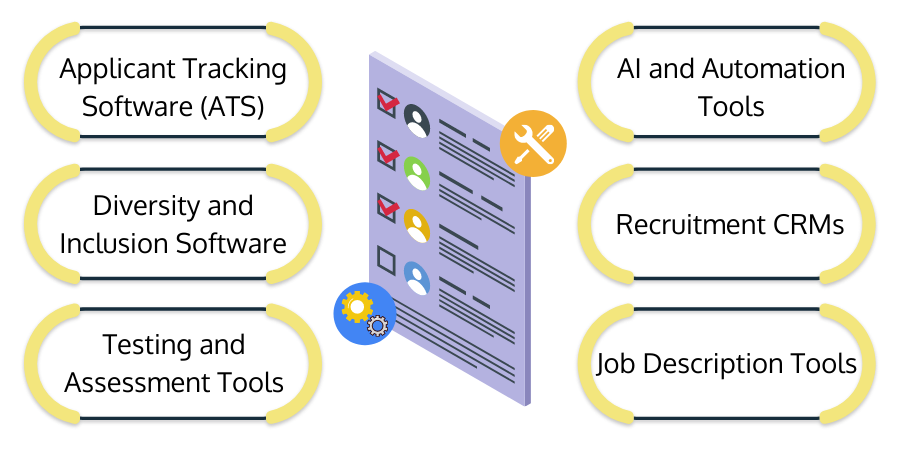
- Applicant Tracking Software (ATS) - These platforms allow recruiters to track, manage, and engage with candidates from a dedicated window.
- Diversity and Inclusion Software - According to a recent study, 78% of talent professionals say that diversity is a top trend impacting how they hire. Diversity and inclusion software varies but can include features like anonymized hiring tools, screening sessions, and recorded video interviews. Anonymized hiring tools help remove unconscious biases from the hiring process. Likewise, recording interviews allow them to be shared with other decision-makers, reducing the risk of personal bias.
- Testing and Assessment Tools - These tools assess potential candidates' attributes, including skills, personality, and aptitude.
- AI and Automation Tools - Some recruitment tools utilize AI and automation more than others, but ones that use these to a higher degree are favored. AI and automation hiring tools can analyze candidate data, screen potential hires, automate communication (confirmation, feedback, interview times), and allow virtual chat.
- Recruitment CRMs - These tools help HR build and maintain relationships with candidates going through the hiring process.
- Job Description Tools - Improving your job descriptions helps attract higher-quality and more compatible candidates. These tools help generate accurate, engaging, and well-structured job descriptions.

Benefits of Using Recruitment Management Tools
Faster Recruitment
Recruitment is often time-consuming and costly. For example, a survey by Glassdoor found that it takes approximately $4000 and 24 days for a US recruiter to hire a new employee. Another study found that each vacancy costs the average company a whopping $500 a day. However, with recruitment tools, much of the screening process is automated, allowing recruiters to focus their attention on sifting through a smaller pool of candidates, and ultimately, hiring faster.
Reduce Cost Per Hire
Recruitment tools can help drive down recruitment costs in many ways. For example, using the right assessment tools means you can more easily find candidates with high job compatibility and reduce the length of vacancies. Additionally, eliminating manual processes means there's less need to hire additional HR staff to help with recruitment.
Improved Candidate Engagement
Candidates consider their whole experience with your company when choosing whether to accept a job offer. Therefore, recruitment tools can help create a positive impression of your brand throughout the hiring process. Additionally, hiring engagement tools help your company seem more friendly and less intimidating, which ultimately means you'll get more from your candidate in the interview room.
Improved Hiring Accuracy and Efficiency
Recruitment tools help eliminate much of the human error involved in manual recruitment processes, like not creating an accurate job description, not getting all the information you need from candidates, not checking references, or failing to respond to candidates. These tools also improve efficiency by ensuring critical recruitment activities happen on time and tasks are delegated to the correct HR staff.
Streamlining Candidate Data
Hiring management tools allow you to digitally store candidate information in one location. This makes it much easier for recruiters to retrieve relevant information when they need it without endlessly searching through resumes.
Improving the Quality of Hires
All companies want better quality candidates. This doesn't just mean candidates with specific qualifications or skills, but also those that are an excellent cultural fit for the company. You can configure recruitment management tools to screen for particular qualities. They can also improve your brand's reputation externally. For example, job description tools help you create a great first impression, and auto-communication and interview scheduling tools create the impression you are organized and serious about finding the right person for the job.