
 Batoi Corporate Office
Introduction
Every organization requires managing events associated with client meetings, product launch events, VIP speaker sessions, workshops, in-house parties, fresher's welcome, etc. Event planners are responsible for accomplishing such events. But there are a lot of variables & factors that come along with such events that event planners have to keep in mind. It is difficult for an individual or even a team to analyze all the factors and conditions that an event requires to carry it out successfully. That is where the event management system comes. If you want to understand what an event management system is, you have navigated to the exact web page. Without any fuss & delay, let's jump straight into what an event management system is?
What is an Event Management System?
An event management system helps the event planner or the organizer plan, execute, analyze, and report events to drive success in the event planning and management business. These are application software that event planners use to handle large-scale events, such as product launches, festivals, corporate conferences, ceremonies, seminars, concerts, formal parties, or conventions. Today almost all events require such management and analysis tools. It is like a business tool covering various aspects of scheduling an event, from planning to post-event stages. Some event management systems are end-to-end solutions that cater to functionalities for the entire event life-cycle. Again other such event management solutions focus on explicit processes of event organizing such as registration, online invitation, automatic analysis of guests and gatherings, floor planning, ticketing, analytics, schedulers, and surveys. Some well-known event management solutions are Event App on Batoi CloudSpace, Eventbrite, EventZilla, Cvent, Event Management Cloud, Ticket Tailor, etc.
Primary functionalities of an Event Management System - There are a lot of event management system that allows event planners to:
- Reduce or eradicate missed communications
- Lessen administration efforts
- Helps event planners organize things as per customer requirement
- Enhance your campus flexibility
- Digitize and automate a lot of your events operations
- Saves time to plan the entire event and brings precision to the workforce. · Comply with industry standards
- Predict and reduce unnecessary efforts such as weather, logistics, etc.
- Performs background analyzing and reporting of different factors of events.
Features of an Event Management System
There are a lot of features that make an event management system stand out from the rest. Here are some of them.
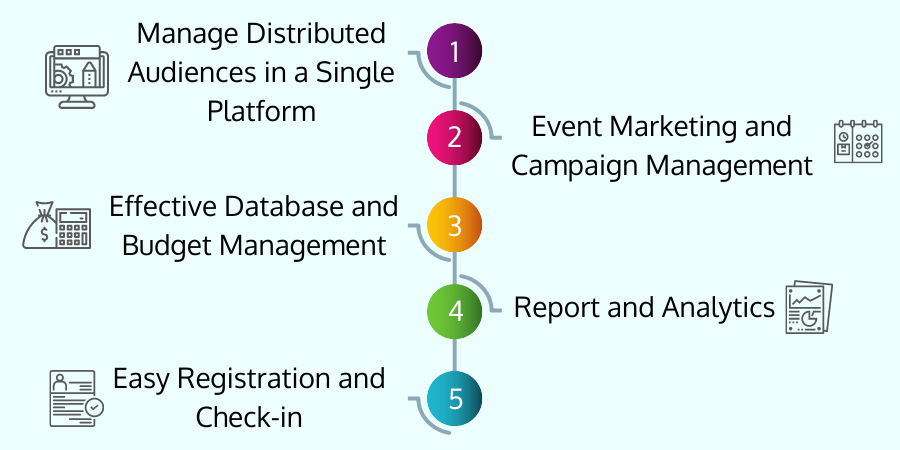
- Manage Distributed Audiences in a Single Platform: The throat-cutting pain point that most event planners and organizers face is the distributed audiences coming from different backgrounds. It is not always easy to merge virtual and in-person elements or manage them in isolation. But with the event management system, organizers can efficiently manage distributed audiences under one platform.
- Effective Database and Budget Management: With the advent of event management solutions, managing budgets and maintaining a database of all fiscal ordinations have become easy. It also helps the event planner monitors business funds & expenses. Again, everything remains under one umbrella - it becomes easy to manage the event expenditure and reevaluate the budget at every event planning phase. Event management systems also help track financial and event-based operations, plus save all the invoice details in a database. The databases within the event management system collate all the collected data, right from registration to analyzing and serving guests. Through the database, it becomes easy for the organizer to find out the mailing list and previous attendees and auto-invite them with a single button click.
- Easy Registration and Check-in: Event management systems also come with functionality to allow online and offline registration plus pre-order booking. Through this system, the event planner can skip or stop pre-order booking & eliminate guessing who is coming to the event & evade chaos at doorways. Event registration and check-in personalization depend highly on the initial data & past event data about attendees. The event management system also keeps room for the prospect of adding new guests on-site. Such a tool renders a state-of-the-art facility to manage online and offline registrations along with dynamic check-ins of unexpected guests for your corporate and other events.
- Event Marketing and Campaign Management: There are events like product promotion & corporate seminars that require advertising to make the entire event successful. For that, the organizer requires to create an online community and offline banners to let the masses know about the event. Social media campaigning, auto-mailing, blogging, sharing tweets and posts, publishing a headline in different national and international newspapers requires proper management. All of these come under event marketing, and to manage these, event planners use event management solutions. Also, some clients might hire temporary marketing employees who help share leaflets, brochures, and online platforms to broaden their reach around the event.
- Report and Analytics: All modern event management software brings in default report generating and analytics abilities. These data-driven reports and analytics help the event management team vividly analyze and understand what happened at or during the event. Also, these stats and analyses help the event planners find the gaps where they can improve. Analysis through visuals & reports altogether allows the client to measure the event ROI, comprehend attendance rates, or extrapolate out which sessions or part of event guests and visitors found most engaging. Furthermore, these data and reports can help better plan the event in upcoming years.
Apart from all these features, event planners can also run such event management systems on computers, mobiles, and other platforms. That makes such software portable and easy to use on different screen-size.
Conclusion
Client happiness lies in executing a successful event. Having an event management solution is essential for the organizer or the event planner to enhance the management performance and productivity. Leveraging an event management solution also helps the team organize all the functions and operations and is critical for successfully running the event. Such solutions cater to multi-dimensional benefits such as product showcasing, advertising, event marketing, engaging attendees, secure event ticketing, online registration, personalizing the event supports, and staff recruitment management related to events. Manually performing all these things usually requires immense time, effort, and workforce. So, event management solutions are a cost-effective way of rendering all events successfully for every customer.